A complete measurement of solar irradiance includes global (GHI), direct (DNI), and diffuse (DHI or DIF) radiation. To accomplish this, a high-quality solar monitoring station typically comprises an automatic sun tracker fitted with instruments to measure these components individually. Depending on the application, long-wave radiation and reflected short-wave radiation may be added to provide the total radiation balance. This is especially relevant for meteorological and climatological observations. Furthermore, ultraviolet radiation and other measurements may also be taken.
For most applications it is not only the momentary value of the parameter being measured that is important. Variations in the amount of energy received over a period of time, and the effects to be expected as a result, are extremely important. It is usual to measure and record meteorological parameters during the diurnal cycle (daily course) in order to make predictions about the future weather conditions.
Three models, choose the right sun tracker for your application
To keep all instruments aligned with the solar orbit, automatic sun trackers follow the path of the sun. OTT HydroMet offers three different models under the product brand Kipp & Zonen:
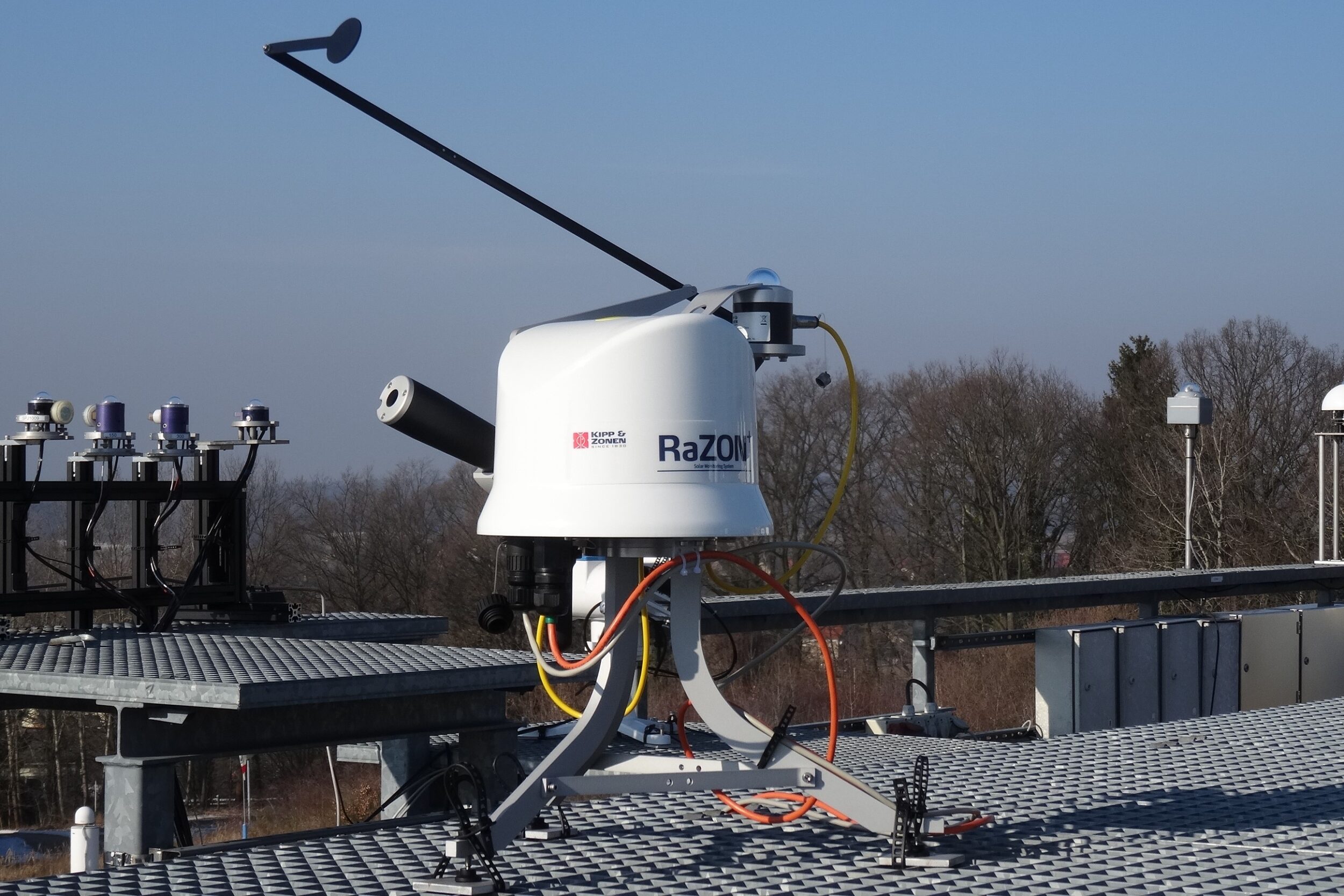
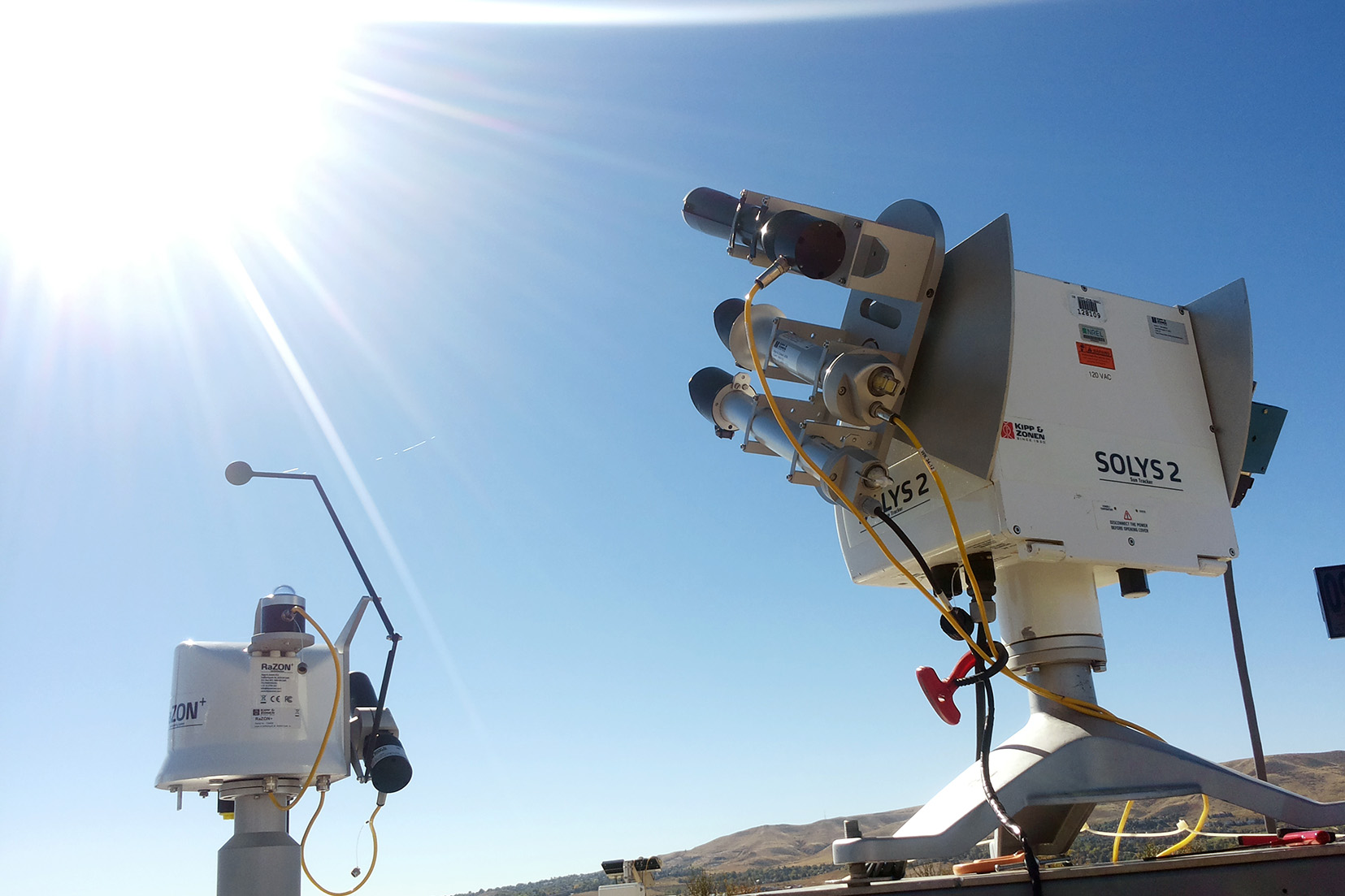
RaZON+
ALL-IN-ONE Solar Monitoring System that provides global (GHI), direct (DNI) and diffuse (DHI) irradiance and can be expanded to a full weather station with third party sensors. GPS and data logging are integrated. Customer friendly interface and anti-soiling design to reduce maintenance.
Applications: It is a perfect fit for small meteorological stations, used in temperate climates. Ideal for solar energy resource mapping, Concentrated Solar Power (CSP), Concentrated Photovoltaics (CPV) and tracking PV site prospecting. Continuous power plant monitoring.
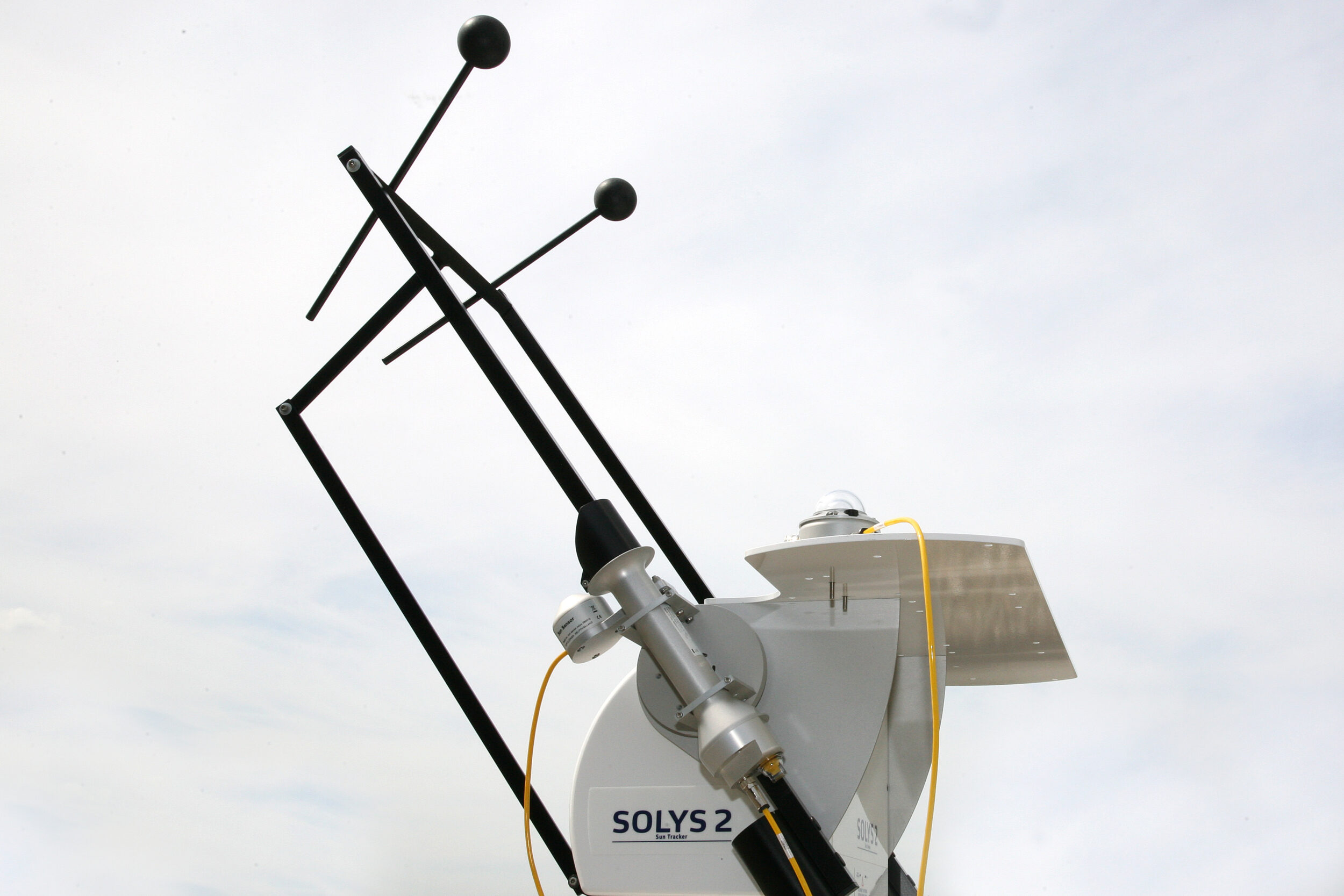
SOLYS2
Versatile sun tracking solution, a wide range of radiometers can be mounted. The integrated GPS automatically configures location and time. Solar position and status monitoring information are available via the communication ports.
Applications: For use in harsher climates and to carry multiple instruments. Meteorology, climatology and BSRN stations. Solar energy site prospecting and plant monitoring.
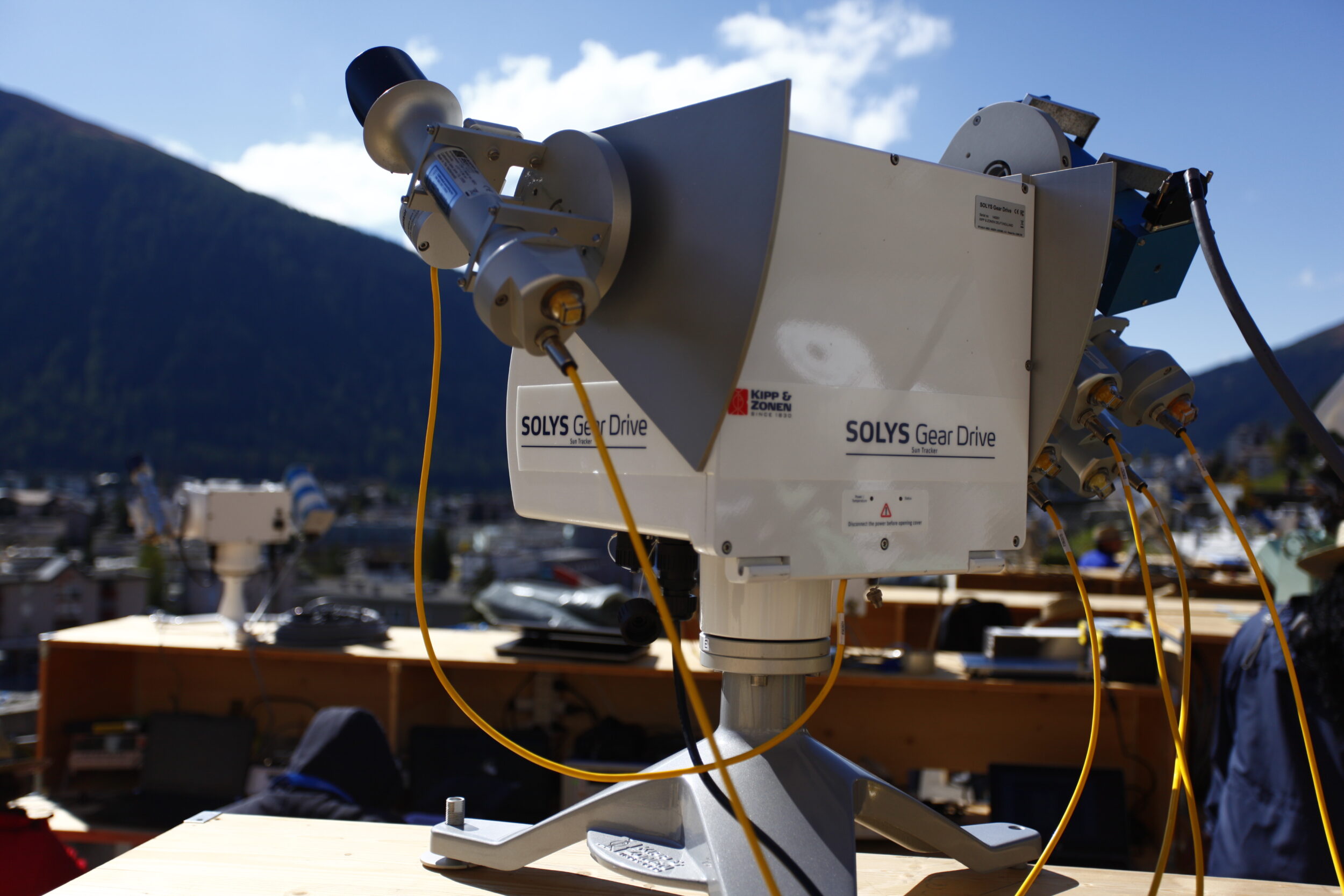
SOLYS Gear Drive
High-end sun tracker for all weather conditions and locations. It builds on the features of the SOLYS2 and has enhanced capabilities that make it suitable for use with heavy loads and in the harshest climates, such as polar conditions.
Applications: Designed for use in extreme climates; very hot, very cold and high wind speeds. Can carry a large number of instruments and heavy loads. Ideal for many scientific research purposes.
Overview
This table gives an overview which sun tracker is the appropriate one for your purpose.
| RaZON+ | SOLYS2 | SOLYS Gear Drive | |
|---|---|---|---|
| Best price/performance ratio | ✅ | ✅ | ✅ |
| Easy transportable, low weight | ✅ | - | - |
| Low power | ✅ | - | - |
| Integrated measurement / calculation of GHI, DNI, DIF | ✅ | - | - |
| Anti-soiling radiometer design | ✅ | - | - |
| Allows fitting of non Kipp & Zonen radiometers | - | ✅ | ✅ |
| Other instruments can be loaded | - | ✅ up to 20 kg | ✅ up to 80 kg |
| Operates under extreme cold conditions (< -20 °C) | - | ✅ (AC power only) | ✅ (AC power only) |
| Sun sensor for active tracking | - | ✅ optional | ✅ |
| Daily uncertainty GHI | 2% | 1 to 2% | 1 to 2% |
| Daily uncertainty DNI | 2% | 1% | 1% |
| Baseline Surface Radiation Network (BSRN) compatible | - | ✅ | ✅ |
Are you interested in learning more? You can find the technical specifications and more details on the Sun Tracker Comparison. Further questions? Our team of researchers and technical experts is happy to help.