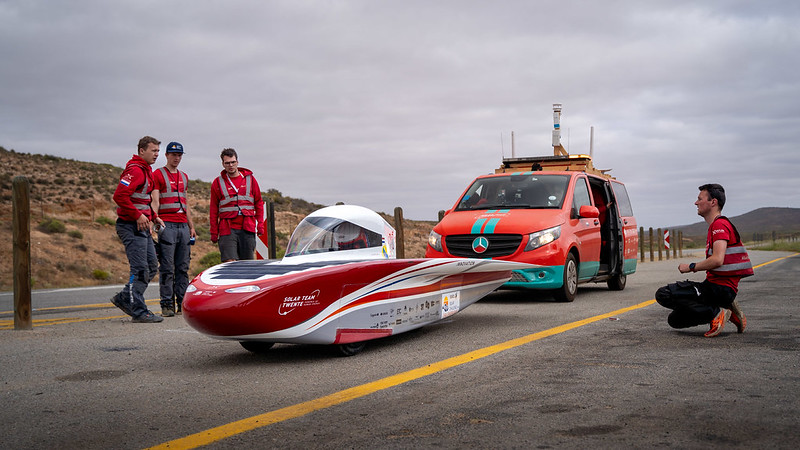
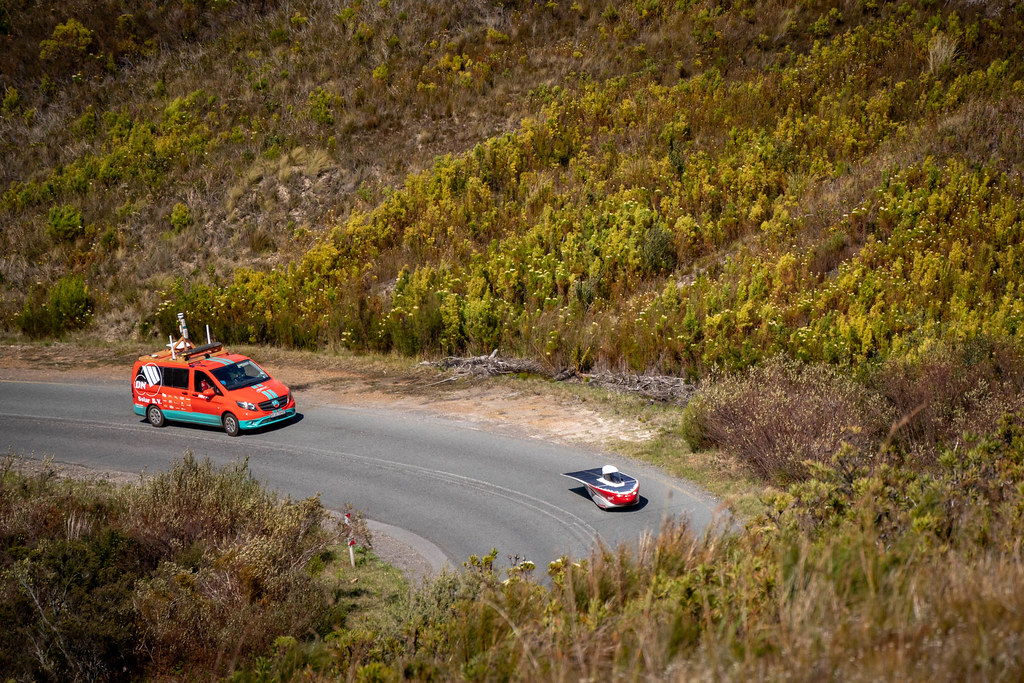
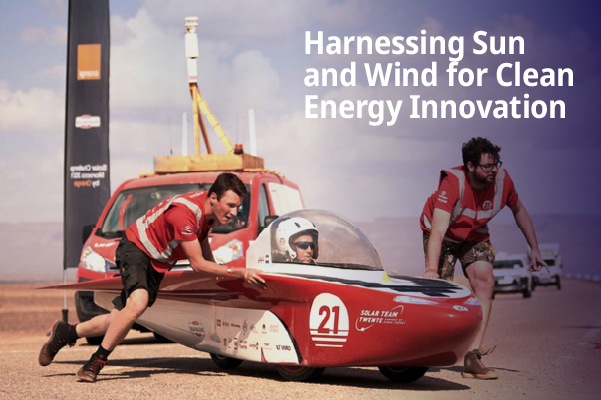
When Solar Team Twente crossed the finish line of the 2025 Bridgestone World Solar Challenge in second place, they didn’t just prove the power of solar energy – they demonstrated how innovation and strategy can overcome the harshest conditions. This 3,021 km race through the Australian outback is a true test of endurance, technology, and ingenuity. For Twente, success came from more than efficient solar cells; it was about mastering the elements, like wind.
Turning Wind into an Ally: Why Accurate Measurement Matters for Solar Racing
The 2025 race introduced a new winter timeslot, bringing strong winds and reduced sunlight. These conditions could have been a setback, but Twente turned them into an advantage. By accurately measuring wind speed and direction, the team exploited tailwinds to optimize speed and energy use, reducing battery consumption and maintaining momentum. Every gust became an opportunity to conserve energy – a strategy that helped them close the gap to just 500 meters behind the leader on the final day.
At the heart of this strategy was OTT HydroMet’sLufft WS200 ultrasonic wind sensor. Mounted at the race camp, it delivered real-time wind data that informed tactical decisions about speed, positioning, and aerodynamic adjustments. Combined with features like a retractable canopy fin and manually mounted “swordfin,” the car could “sail” on the wind, converting natural forces into forward motion without extra power draw. This synergy between design and data was a game-changer.
Technology That Powers the Future: High-Efficiency Solar Cells and Intelligent Design
Twente’s solar car, Red Discover, was powered by AIKO’s N-Type ABC solar cells, boasting over 27% efficiency, excellent temperature performance, and durability. These advanced cells maximized energy yield under extreme conditions, validating their real-world performance and reinforcing the viability of solar-powered mobility.
The Bridgestone World Solar Challenge is a global innovation platform, accelerating solar technology commercialization and shaping the future of sustainable mobility. Alumni often go on to work at leading companies like Tesla, Google, and NASA, creating a pipeline of talent for the clean energy revolution.
Beyond the Finish Line: How Solar Challenges Accelerate Clean Energy Progress
For the students of the University of Twente and Saxion University, this race is more than a competition – it’s a mission. Over 18 months, they designed and built Red Discover to push the boundaries of renewable energy and inspire future engineers. Their achievement underscores the importance of STEM education and hands-on innovation in tackling global challenges like climate change and energy transition.
Watch the video to see how wind intelligence and WS200 technology powered Solar Team Twente’s success.
“Every gust of wind was a chance to go further without using extra energy,” said one team member – a statement that captures the spirit of this intellectual challenge.
As a Senior Manager, Strategic Communications & Campaigns at OTT HydroMet, I focus on creating stories and campaigns about water, weather, and sun that show why reliable data matters.
Clearer focus. Deeper expertise. Decision ready intelligence.Veralto has introduced its Environmental Business to create a clearer, more customer focused structure across environmental analytics. As part of this evolution, Ott and...
A PV module IV curve is one of the most powerful tools available for understanding how a photovoltaic module actually performs under real‑world conditions. More than a theoretical plot, the IV (current-voltage) curve reveals...
Why Measurement Strategy Matters More Than Ever Executive Summary Soiling is a well‑established cause of energy loss in photovoltaic (PV) systems. Less widely recognized is its impact during capacity and performance...